Explore our blog for insights into optimizing your workforce, understanding your team’s potential, and implementing meaningful organizational change.
Most AI pilots never make it past the pilot stage. Studies show as many as 95 percent stall before they ever reach production. The question every executive now faces is simple: why, and how do we move beyond that?
According to MIT’s GenAI Divide: State of AI in Business 2025 report, organizations that fail to cross this divide risk losing competitive advantage within 18 months. Those that succeed do something different—they treat AI not as an experiment, but as infrastructure.
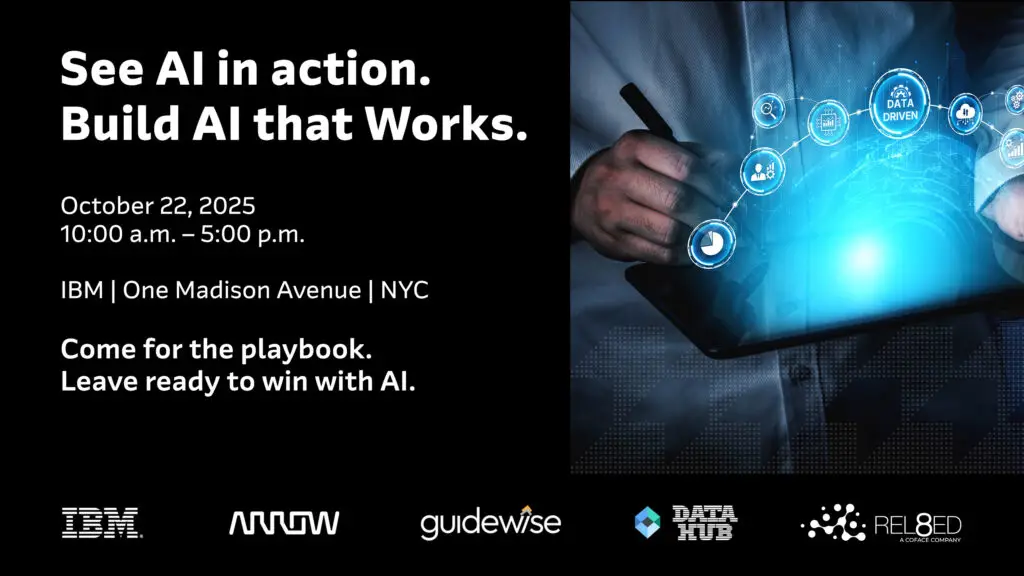
This October, Guidewise was selected by IBM and Arrow Electronics to speak at AI in Action NYC, an event focused on exactly this challenge: how to build infrastructure and partnerships that move AI from isolated experiments to measurable, repeatable, and resilient business results.
Co-founders Ted Wolf and George Wolf will share hard-won lessons from guiding enterprise AI transformations using the IBM watsonx ecosystem and the Changeworks platform—the software system Guidewise created to make AI adoption measurable and lasting.
Across industries, AI initiatives fail for familiar reasons.
Infrastructure gaps. Data lives in silos, lineage is unclear, and integration backlogs leave promising models stranded in proof-of-concept purgatory. Without orchestration to connect APIs, legacy systems, and data flows, projects stall for quarters instead of weeks.
Adoption gaps. Change management is often an afterthought. Teams resist new workflows, leadership misalignment creates mixed incentives, and no one owns accountability for outcomes across business and IT.
Governance gaps. Security, bias, and auditability questions remain unanswered, leaving executives hesitant to scale what they cannot fully trust.
The hype trap. Many organizations chase point-solution tools that fix one problem but do not scale across the enterprise. They build pockets of innovation instead of sustainable capability.
The message is clear: technology alone is not enough. Without resilient infrastructure and trusted partnerships, even the best pilots collapse under real-world stress.
Guidewise approaches AI transformation as the construction of a bridge—a system designed to carry the weight of both technology and people. Every brick matters.
1. Technical Infrastructure
At the foundation is data readiness: consolidating sources into governed data lakes, applying quality checks, metadata tagging, and lineage monitoring.
Above that sits the platform layer, powered by IBM watsonx:
Together, these layers create an infrastructure that makes AI not just powerful, but reliable, trusted, and embedded in day-to-day operations.
In practice, that means designing pipelines with retries, checkpoints, and containerized services so a failure in one process never cascades across the system. Governance is not a luxury—it is the fail-safe that preserves organizational trust.
2. Functional and Human Infrastructure
The Changeworks platform monitors people, process, and technology signals to ensure change sticks. It provides what Guidewise calls human telemetry—real-time insight into emotional, behavioral, and adoption signals that show whether the workforce is aligned with the technical rollout.
An AI system that cannot tolerate failure—technical or human—will never scale. True infrastructure must be designed for resilience, not perfection. It is the unglamorous, essential work that separates temporary success from enduring capability.
3. Partnerships that Unlock Results
Fault tolerance is not just technical; it is organizational. The most successful transformations distribute ownership through partnership:
Internally, partnerships matter just as much. When C-suite leaders, IT, and line-of-business managers co-own outcomes, no single failure can derail progress.
The MIT report reinforces this: pilots built through strategic partnerships were twice as likely to reach full deployment, with employee usage rates nearly double compared to internally built tools. Partnerships reduce single points of failure and deliver faster time-to-value.
Manufacturing: Predictive Maintenance at Scale
A mid-sized manufacturer struggled to scale predictive maintenance due to fragmented data across ERP and OT systems—and constant turnover that disrupted adoption. Staff churn was the single point of failure.
Guidewise and its partners unified ERP, sensor telemetry, and OT data into a fault-tolerant pipeline while utilizing their Changeworks platform to monitor adoption signals. When turnover created training gaps, leaders received early alerts to retrain and re-align teams.
The result was a system fault-tolerant both technically and organizationally: unplanned downtime dropped, model accuracy improved, and turnover’s impact disappeared.
Ultimately, enterprise AI success depends on fault tolerance in both systems and people. When infrastructure and culture are designed to absorb disruption, progress continues even when things go wrong.
Resilient AI requires three elements working together:
When these three align, AI initiatives evolve from pilots to platforms capable of withstanding technical errors, organizational churn, or market shifts.
In short, fault tolerance in enterprise AI means both the system and the people can stumble, and yet the transformation still stands.
This is the bridge Guidewise helps organizations build.
IBM’s invitation to Guidewise to speak at AI in Action NYC is recognition of a shared mission: to help enterprises move beyond AI experimentation to execution that endures. Through watsonx, IBM has provided the trusted architecture; through Changeworks, Guidewise brings the behavioral telemetry that makes adoption sustainable. Together, they form a complete ecosystem for enterprise AI that is reliable, governed, and human-ready.
As AI becomes the new operating system of business, companies that design for resilience—not perfection—will cross the divide first.
If your organization is ready to move beyond pilots and invest in the capability, governance, and partnerships that make AI results last, the Guidewise team would be honored to guide you on that journey.
Because in the age of AI, execution is everything.